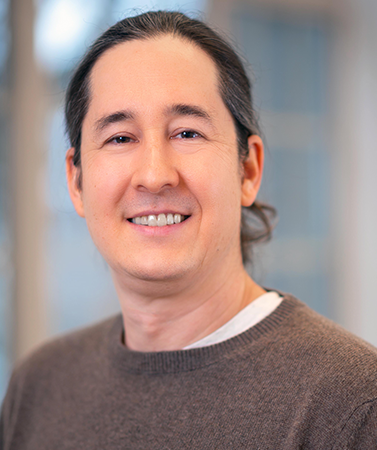
2027 Speaker
Professor Nathan Nunn
Professor & Canada Research Chair, University of British Columbia
Nathan Nunn holds a Canada Research Chair in cultural economics and is a Fellow of the Canadian Institute for Advanced Research (CIFAR) in the Boundaries, Membership & Belonging program, an NBER Faculty Research Fellow, and a Research Fellow at BREAD. He is currently an editor at the Quarterly Journal of Economics, and his work spans political economy, economic history, economic development, cultural economics, and international trade.
His research focuses on the historical and dynamic process of economic development, studying the factors that shape how institutions and cultures evolve across societies. He has examined the historical roots of many factors that matter for development, including distrust, gender norms, religiosity, conflict, immigration, state formation, kinship, and zero-sum thinking. His work also addresses contemporary settings—Fair Trade certification, Cold War CIA interventions, foreign aid, school construction, and climate change—with particular attention to how local context (social structures, traditions, and cultures) shapes the effectiveness of development policy and how policy can be optimally designed given the local environment.
His research focuses on the historical and dynamic process of economic development, studying the factors that shape how institutions and cultures evolve across societies. He has examined the historical roots of many factors that matter for development, including distrust, gender norms, religiosity, conflict, immigration, state formation, kinship, and zero-sum thinking. His work also addresses contemporary settings—Fair Trade certification, Cold War CIA interventions, foreign aid, school construction, and climate change—with particular attention to how local context (social structures, traditions, and cultures) shapes the effectiveness of development policy and how policy can be optimally designed given the local environment.
Title of the Lecture: TBD
Abstract: TBD
Day: April 2nd
Time: TBD
Location: TBD
Abstract: TBD
Day: April 2nd
Time: TBD
Location: TBD